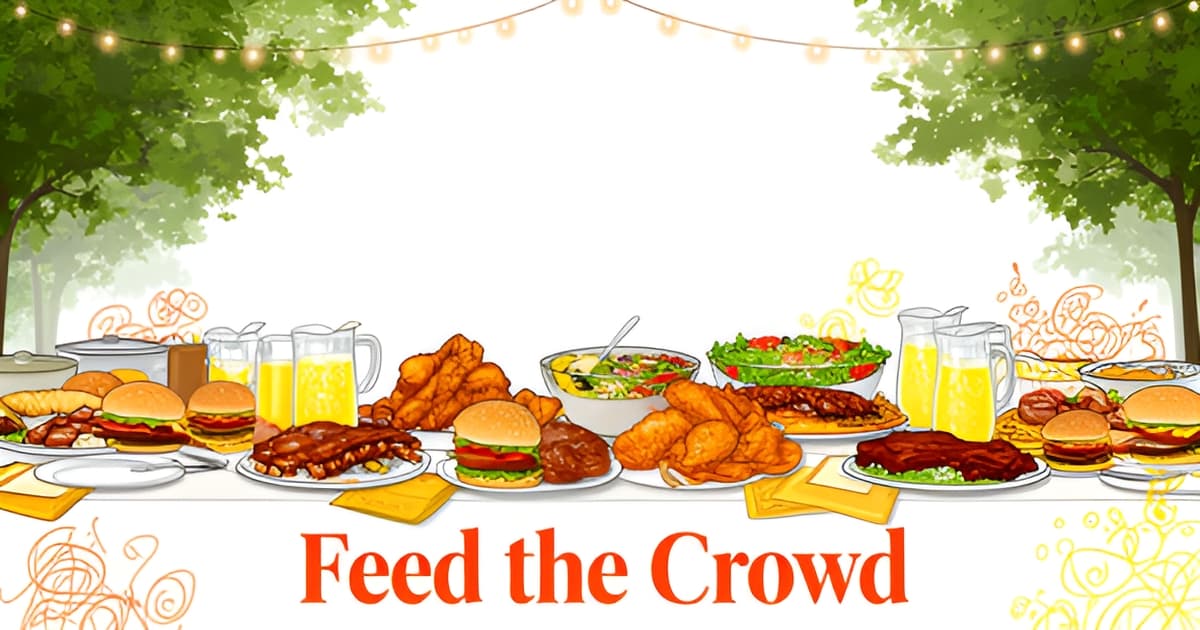
What is a good menu for a family reunion?
Key Facts
- A family with 20+ years of reunions feeding 50+ people says assigning each family one meal works for 15 guests or 50 according to veteran hosts.
- For 50 guests, plan 75–100 burger patties, 18–25 lbs of BBQ meat, and 75–100 chicken pieces per the Reunly checklist.
- Ice is the most commonly underestimated reunion item, budget 1 to 1.5 lbs per person, or 60–75 lbs for 50 guests planning guides warn.
- Caterers call taco bars customizable, interactive, and a hit across all ages according to professional caterers.
- Perishables should sit out no more than two hours, just one hour when temperatures top 90°F food safety guidance advises.
- Roughly 1 in 10 reunion guests will have vegetarian or vegan needs, so plan one solid plant-based main per Reunly's planning math.
- One 55-person, 5-day reunion required 3 flat beds and 3 carts at Costco, and that was only half the food the host reported.
Why Feeding a Crowd Feels Overwhelming (and the System That Fixes It)
Hosting a family reunion means one person faces a daunting question: what is a good menu for a family reunion when you’re cooking for 15 to 50+ people across multiple days? The answer isn’t a single recipe; it’s a system. The single most praised fix, validated by families who’ve hosted 20+ years and fed 50+ guests, is the meal-assignment system where each family takes ownership of one meal. This approach scales effortlessly, working just as well for a reunion of 15 as it does for 50, and transforms the host from a short-order cook into an event facilitator. By distributing the cooking load, the host frees up mental bandwidth and physical time, leaving room for the fun stuff like a family trivia game or a round of family trivia questions.
Research confirms that delegation beats solo hosting every time. One family with 20+ years of reunions feeding 50+ people credits their system: “each family gets assigned one dinner or lunch for the whole group,” noting it works “just as well for a reunion of 15 as it does for 50” (71toes). Similarly, a 55-person, 5-day reunion succeeded because “pre-planning the meals really worked out great and people appreciated not having to decide what they were going to make” (yourhomebasedmom). This system doesn’t just solve logistics; it opens the door for interactive, customizable meal formats that pair naturally with social activities. Professional caterers recommend taco bars, slider bars, and Hawaiian haystack toppings precisely because they are “customizable, interactive, and a hit across ages” (catering-by-design), allowing guests to assemble their own plates on their own schedule. This self-serve format is ideal around scheduled activities, keeping the meal casual and the conversation flowing toward a family trivia board game or trivia cards about family history.
A practical menu built on this framework combines make-ahead favorites with crowd-pleasing standards. Think grilled lemon-herb chicken or burgers as the centerpiece, paired with sides like pasta salad, corn on the cob, and watermelon. For 50 people, Reunly’s per-person math suggests roughly 75–100 burger patties or links, 18–25 lbs of cooked BBQ meat, and 75–100 chicken pieces, plus ~2 gallons each of potato and pasta salad, baked beans, and about 120–150 drink servings (reunly.io). Round up quantities by about 10% for big eaters and seconds, and plan for roughly 1 in 10 guests having vegetarian or vegan needs (reunly.io). To honor family heritage, encourage each family to bring one heirloom recipe, a “must-have” picnic staple like deviled eggs or fried chicken, that carries strong emotional weight across generations (tasteofhome). As the meal winds down, a well-curated dessert table, sometimes no baking required, provides the perfect low-labor finish.
The result is a reunion menu that is low-labor, self-serve, and deeply connected to the people at the table. When the host isn’t tethered to the stove, there’s space to gather ‘round the table for a family trivia game, share stories behind great-aunt’s famous casserole, or simply enjoy the company. Print it. Doodle it. Done.
family trivia game family trivia questions family trivia board game
Menu Formats That Feed Everyone and Free Up Game Time
If you want game time to actually happen at your reunion, the menu format matters as much as the menu itself. The best answer to "what is a good menu for a family reunion" often isn't one dish at all. It's a self-serve setup where guests build their own plates and nobody's stuck in the kitchen.
Professional caterers consistently point to interactive formats like BBQ buffets, slider bars, and taco bars. As Catering By Design puts it, "a taco bar is customizable, interactive, and a hit across ages." The same logic applies to Hawaiian haystacks, a favorite from Your Home-Based Mom's five-day, 55-person reunion, because "people can tailor it to their own taste." When guests assemble their own plates, everyone eats on their own schedule, which keeps the meal casual and leaves room for what comes after.
Whatever format you choose, cover all six categories so nobody goes hungry: protein, cold sides, hot sides, bread, drinks, and dessert. The Reunly planning guide warns that "usually it's the hot sides or the bread that get forgotten," and their quantities for 50 people are worth copying: 75 to 100 chicken pieces, about 2 gallons each of potato and pasta salad, 75 buns, and 5 to 8 gallons of lemonade or tea. Round everything up by roughly 10% for big eaters and seconds.
Make-ahead strategy is what actually frees up your time. A few approaches that work:
- Crock pots and oven-warming for dinners made the night before, so serving is a lift-and-lid operation
- Night-before marinating and prep, so cooking day is mostly assembly
- A no-bake dessert table, because as one reunion host found, "a well-curated dessert table is all you need"
- Assigning each family one meal for the whole group, a system one host has used to feed 50+ people for over 20 years
Self-serve formats pair naturally with table activities, too. When guests are already gathered around a long table building tacos or haystacks, it's easy to keep printed activities within reach, and Printoodle-style printable games fit that setup well since reprints are always free. Once the plates are cleared, have a family trivia game printed and ready to go. You can even tie the questions to the menu itself: who brought Great-Aunt Frances' lemonade, and whose fried chicken disappears first every year? If you want more material, a set of printable family trivia questions or a family trivia board game keeps the whole crowd at the table long after dessert.
The food fills everyone up. The low-labor format is what gives you the afternoon back.
A Sample Reunion Menu with Real Quantities for 50 People
The best family reunion menus balance crowd-pleasing classics with self-serve formats that keep guests mingling rather than stuck in the kitchen. Research across multiple planning guides confirms that interactive formats, like taco bars or slider stations, are ideal for mixed-age groups because they allow everyone to customize their plate, freeing up host time for activities like a family trivia game.
For a group of 50, precise quantities prevent the stress of running short or wasting food. Reunly’s checklist recommends 75–100 burger patties or links, 18–25 lbs of cooked BBQ meat, and 75–100 chicken pieces to ensure there is plenty without excess. Sides should include approximately 2 gallons each of potato salad and pasta salad, 2 gallons of baked beans, 3 lbs of greens, and 4–5 lbs of chips. No menu is complete without bread; plan for 75–100 buns to accompany the main dishes. To keep drinks flowing, budget for 120–150 servings, 5–8 gallons of lemonade or iced tea, and, crucially, 60 to 75 lbs of ice. As Reunly notes, ice is "the most commonly underestimated item," with a rule of thumb of 1 to 1.5 lbs per person. Reunly also advises rounding up all quantities by roughly 10% to account for big eaters and seconds, and planning for roughly 1 in 10 guests having vegetarian or vegan dietary needs.
Food safety is non-negotiable when serving a crowd. Hot foods should be held at 140°F or above, and cold foods kept at 40°F or below. Perishables must not sit out for more than two hours, reduce that window to just one hour if the temperature tops 90°F. Chicken, a reunion staple, must reach an internal temperature of 165°F. To manage dietary preferences, send a quick survey on the RSVP so you can flag vegetarian options early, ensuring no one goes hungry.
A sample menu for 50 might feature grilled lemon-herb chicken or burgers as the protein centerpiece, corn on the cob as a hot side, pasta salad and baked beans for cold options, and fresh watermelon for a light, hydrating finish. Cap the meal with a curated dessert table featuring brownies, fruit tarts, and maybe a family favorite cake. To weave in tradition, invite one family to bring a generational recipe, perhaps Mamaw Emily’s strawberry cake, and encourage guests to share the story behind it. This not only honors family history but also provides natural talking points for a family trivia board game or trivia cards about your lineage.
Print it. Doodle it. Done. family trivia game, family trivia questions, or family trivia board game to keep the conversation flowing long after the plates are cleared.
Heirloom Recipes, Trivia, and Turning Dinner into a Memory
Some dishes do more than fill plates. They carry a family's whole history in one bite, and no answer to what is a good menu for a family reunion is complete without them.
Taste of Home's reunion collection is built almost entirely on generational recipes like "Mamaw Emily's Strawberry Cake" and "Aunt Frances' Lemonade," because those are the dishes people actually remember. One contributor noted her salad "goes to all our family reunions... and I go home with no leftovers!" The picnic staples carry the same weight. As one cook put it, "For our family, it's not a picnic unless we have fried chicken!"
Pair one heirloom dish with its story. Ask each household to bring a single signature dish plus a short written story: who created it, where it came from, the year it first appeared. A professional caterer quoted by AARP puts it well: family-favorite recipes "fill hearts with love and smiles" and create "lasting memories." The hybrid approach makes this easy. Cater the main protein, assign sides and desserts to families, and the nostalgic recipes show up in the spread without anyone bearing the full cost or workload.
Then let the menu feed the entertainment. Every heirloom story becomes a trivia question waiting to happen. A few directions that work well:
- "Who first made the strawberry cake, and in what decade?"
- "Which dish always comes home with zero leftovers?"
- "Whose fried chicken recipe has the buttermilk trick?"
- "Which cousin's deviled eggs serve exactly 24 people?"
After the plates are cleared, run those questions as a proper game. Printoodle's family trivia game and its library of family trivia questions let you build a custom round in minutes, or you can turn the whole evening into a family trivia board game session where teams compete across generations.
The timing works because the meal format does. Self-serve, make-ahead spreads like taco bars and picnic tables keep everyone gathered in one place, and hosts who aren't stuck in the kitchen can actually run the game. One veteran reunion family credits their meal-assignment system for exactly this: "each family gets assigned one dinner or lunch for the whole group," a setup that works for 15 people or 50.
That's the real payoff. The food tells the stories, the trivia game keeps them, and next year's menu writes itself from whatever new dish walks through the door.
Your Reunion Food Planning Checklist
The best reunion food doesn't come from a perfect recipe; it comes from a plan made weeks before anyone fires up the grill. Families who've hosted for 20+ years say the single best thing they ever did was assign each family one meal for the whole group, a system that works for 15 people as easily as 50. Here's how to build that plan without the guesswork.
Start with the RSVP survey. Ask about allergies, vegetarian needs, and must-have dishes when people respond. Planning guides suggest budgeting for roughly 1 in 10 guests with vegetarian or vegan needs, so one solid plant-based main covers you. The survey also surfaces heirloom recipes worth featuring, from Mamaw's strawberry cake to the deviled eggs someone's been bringing since 1995.
Book early, decide by budget. For summer reunions, caterers recommend booking 8–12 weeks ahead (4–6 weeks off-season), while AARP's guidance says start organizing 6 to 12 months out for large gatherings. As reunion blogger Marie Bostwick puts it, the potluck-versus-catering question "really comes down to budgets." A hybrid works well: cater the main protein at roughly $15–$25 per person for a buffet, and let families cover sides and desserts. That keeps costs down and gets nostalgic recipes onto the table.
Run through your checklist:
- Dietary survey on the RSVP, plus a 10% buffer on quantities for big eaters and seconds
- Caterer booked 8–12 weeks ahead for summer, or planning started 6–12 months out
- Potluck vs. catering decided by budget, with a hybrid split if costs are tight
- All six categories covered: protein, cold sides, hot sides, bread, drinks, dessert (hot sides and bread get forgotten most)
- Ice ordered at 1–1.5 lbs per person, plus a two-hour food safety rule (one hour above 90°F)
Prep your printables before the food is. Self-serve formats like taco bars and toppings bars keep the meal casual and free up your attention, which is exactly when table activities earn their keep. Generate your family trivia game ahead of time so it's printed and stacked next to the napkins, not created in a panic the night before.
Printoodle makes this the easy part of your prep. Build a family trivia board game from your own clan's history, pull family trivia questions about who brought which heirloom dish, and print activity pages for the kids' table. Reprints are always free, so you can run the same trivia night next year with new questions.
Do the planning now, and when the food hits the table, the only thing left on your list is enjoying it.
The Menu Is the Plan, the Memories Are the Point
So, what is a good menu for a family reunion? As we've seen, it's less a recipe and more a system: assign each family a meal, lean on self-serve formats like taco bars and slider stations, cover all six food categories with a 10% buffer, and let one heirloom dish anchor the table with its story. Do that, and you're no longer a short-order cook, you're the host who actually gets to sit down. That's where the real payoff lives: when the food runs itself, the stories flow, and every heirloom dish becomes a trivia question waiting to happen. Before the reunion, turn those stories into a family trivia game or a full family trivia board game, Printoodle generates print-ready pages in seconds, and reprints are always free for next year's new questions. Start with your RSVP survey and your menu assignments this week, then doodle the games. Print it. Doodle it. Done.