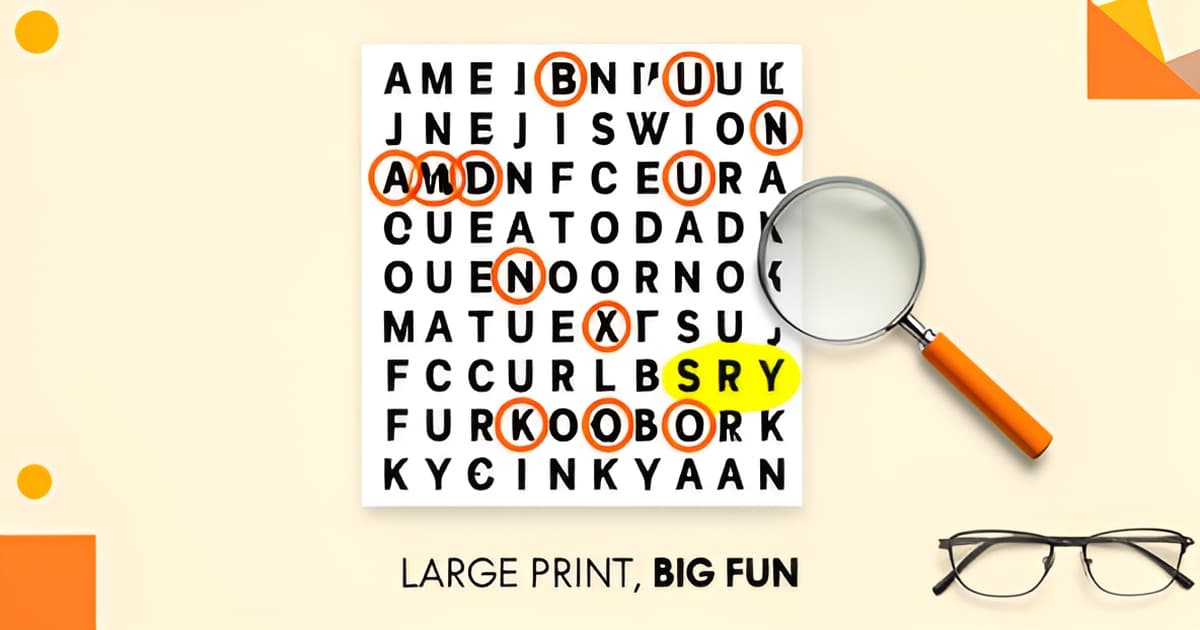
What is a good word search game for seniors?
Key Facts
- The research calls large-print word search 'the most requested activity sheet in senior living,' with 18pt as the minimum print size and 24pt preferred for bold, high-contrast grids
- A Duke/Columbia trial found crossword puzzles beat computerized cognitive games for older adults with mild cognitive impairment across cognition, daily functioning, and brain shrinkage
- The Bronx Aging Study of 488 adults aged 75–85 found crossword participation delayed accelerated memory decline by 2.54 years in people who developed dementia
- University of Wisconsin research of 329 cognitively normal adults linked frequent puzzle playing to greater gray matter volumes in Alzheimer's-related brain regions
- A 2024 Texas A&M study of 5,932 adults with mild cognitive impairment confirmed word games improved memory, attention, and processing speed
- Senior activity specialists recommend theming puzzles by season, holiday, or decade as 'built-in conversation starters' that spark reminiscence
- Guidance suggests keeping puzzle sessions to 10 to 15 minutes, attached to routines like morning coffee for consistent engagement
Why Finding the Right Word Game for a Senior Is Harder Than It Looks
Your dad used to tear through the Sunday crossword in pen. Now he pushes the puzzle book aside after ten minutes, squinting and frustrated, and you're left wondering what happened. If you've been asking yourself what is a good word search game for seniors, the honest answer is that the puzzle probably didn't change. His eyes and energy did.
Low vision is the first barrier most families run into. Standard puzzle books typically print grids in fonts far too small for aging eyes, and the guidance from senior activity professionals is blunt: print size is participation. Their recommendation is an 18-point minimum, with 24 points or larger preferred, and bold, high-contrast grids instead of decorative fonts. Miss that spec and even a willing puzzler gives up before finding a single word.
Cognitive fatigue is the second barrier. On low-energy days, a crossword demands vocabulary recall that can feel like work. Word searches are different: they lean more on visual attention than vocabulary, which is a big reason large-print word search is the most requested activity sheet in senior living communities. The task feels gentle and relaxing rather than like a test.
The third barrier surprises people: many digital "brain games" miss the mark for older adults. A randomized trial published in NEJM Evidence found that crossword puzzles actually beat computerized cognitive games for older adults with mild cognitive impairment, improving cognition and daily functioning while slowing brain shrinkage. Researchers suggested familiarity may have played a role; most participants, averaging around age 71, had spent decades with paper puzzles. When evaluating apps, senior-focused reviewers suggest looking for large text, no countdown timers, and no confusing ads. For many families, printable puzzles sidestep those problems entirely.
So what actually makes a word search work for a senior? A few criteria come up consistently:
- Large print: 18 points at minimum, 24 points or better, with bold grids
- Familiar, traditional paper format rather than a screen
- Personal themes like a season, holiday, or decade that spark reminiscence
- Short sessions of 10 to 15 minutes, attached to a routine like morning coffee
That last point matters more than it sounds. A themed puzzle built around "1950s kitchen" or a hometown can spark conversation a generic puzzle never will, which is why tools like Printoodle's word search maker let you generate custom large-print grids from your own word lists and print them at home. And when vision makes reading hard on a given day, pairing the puzzle with a verbal game such as finish the phrase for seniors keeps the activity going without any reading at all.
The right game, in short, is one sized for her eyes, paced for her energy, and themed around her life.
The Answer: A Large-Print, Themed Word Search (Here's the Evidence)
The research is clear: a large-print, themed word search is the ideal game for seniors. Studies consistently show that puzzle size directly impacts participation, 18pt is the minimum threshold, but 24pt is preferred to accommodate changing vision. Beyond print size, theming by season, holiday, or decade transforms a simple grid into a conversation starter, sparking reminiscence that a generic puzzle never can.
This format offers real cognitive advantages. A landmark Bronx Aging Study found that regular puzzle participation delayed the onset of accelerated memory decline by 2.54 years in individuals who eventually developed dementia. Similarly, University of Wisconsin research of 329 cognitively normal adults found frequent game players had greater gray matter volumes in Alzheimer's-related brain regions, with each additional activity point reducing annual decline by 52% over six years. A 2024 Texas A&M study of over 5,900 adults with mild cognitive impairment confirmed that high engagement in word games and similar activities was linked to better memory, attention, and processing speed.
However, the evidence comes with important honesty. The National Institute on Aging notes that people reliably improve at practiced tasks, but transferring those skills to everyday life remains limited. Research consistently frames puzzles as a tool that may delay symptoms but cannot prevent dementia on its own. The Duke trial reinforced this reality, showing that familiar, traditional formats like crosswords outperformed computerized games for older adults with mild cognitive impairment, but the researchers suggested the benefit may stem from lifelong familiarity rather than the format itself.
The goal remains enjoyment. A randomized trial in NEJM Evidence found that 12 weeks of crossword training plus boosters over 78 weeks improved cognition, daily functioning, and even slowed brain shrinkage, though about 15% of participants dropped out. For seniors, the evidence supports short 10–15 minute sessions attached to daily routines like morning coffee, with success celebrated over scores.
A good word search game for seniors isn't about difficulty, it's about accessibility and connection. Themed puzzles that reference a loved one's career, hometown, or favorite era provide built-in conversation starters while respecting visual needs. Printoodle's word search maker allows families and caregivers to generate custom, large-print puzzles in seconds, turning personal memories into engaging activities. Try the finish the phrase for seniors tool for a complementary verbal game that requires no reading but sparks the same joyful engagement. Print it. Doodle it. Done.
How to Make It Personal: Theming, Reminiscence, and Pairing With Other Games
A generic puzzle fills ten minutes. A puzzle built around someone's own life starts a conversation that outlasts the page. That's the real difference when you're deciding what is a good word search game for seniors: the words on the grid matter as much as the size of the type.
Senior-activity specialists recommend theming puzzles by season, holiday, or decade for "built-in conversation starters," and note that a themed grid like a 1950s kitchen "sparks reminiscence a generic one never will" (ActivityBuilder). A word search about a hometown, a career, or grandchildren's names works the same way. Every found word pulls a story out, and the story is the point.
You don't need design skills to do this. A free word search maker like Printoodle's lets you type in your own word list, so a personalized puzzle takes about a minute to build and prints in large, high-contrast type. Good theme ideas include:
- A decade they lived through: 1950s kitchen, 1960s music, old car models
- Their hometown: street names, landmarks, local foods
- A career: farming, nursing, teaching, tools of the trade
- Family names, pets, and favorite holiday traditions
Keep sessions short. Guidance from senior-care practitioners suggests 10 to 15 minutes per session, attached to an existing routine like morning coffee, and celebrating participation rather than scores (SilverMind). A puzzle that lives next to the coffee pot gets played; one that requires a special occasion doesn't. And since word searches lean on visual attention rather than vocabulary recall, they suit low-energy days too (SilverMind).
For seniors with low vision or dementia, pair the word search with a game that needs no reading at all. Verbal games like proverb and phrase completion rely on spoken memory instead of print (ActivityBuilder). Printoodle's finish the phrase for seniors tool generates exactly that kind of prompt sheet, so one activity session can flex between the two formats depending on how the day is going.
Variety matters more than difficulty, as activity coordinators put it: rotate formats, keep success rates high, and let the puzzle do what it does best, which is open the door to a good talk (ActivityBuilder).
Build Your Own in Minutes With Printoodle's Word Search Maker
The best word search game for seniors might be one that doesn't exist yet, at least not until you make it yourself. A personalized puzzle built from a senior's own memories does something a generic puzzle book can't: it turns a quiet activity into a conversation.
That's where Printoodle's word search maker comes in. You type in your own word list, whether that's names of grandchildren, streets from an old neighborhood, or words from a 1950s kitchen, and the generator builds a print-ready puzzle around them. According to senior activity specialists, theming a puzzle by season, holiday, or decade creates built-in conversation starters, and a personalized grid like "1950s kitchen" sparks reminiscence a generic one never will.
The process takes minutes:
- Gather 10–20 words from a theme your loved one actually knows: their hometown, career, garden, or favorite holiday.
- Enter them into the word search maker and generate the grid.
- Download the print-ready PDF in Letter format, or toggle to A4 if you're outside the U.S.
- Print as many copies as you need. Reprints stay free forever in your library, so activity directors can restock a whole room from one puzzle.
Accessibility is built in from the start, which matters because print size is participation: senior activity guides recommend 18pt as the floor and 24pt or better as the target, with bold, high-contrast grids. A large-print puzzle that leans on visual attention rather than vocabulary recall also suits days when energy is lower, which is one reason experts describe word searches as gentle and relaxing.
The personalization angle has real substance behind it, too. A Bronx Aging Study of 488 cognitively intact adults aged 75–85 found that crossword participation delayed accelerated memory decline by 2.54 years in people who developed dementia (Pillai et al., 2011). And a University of Wisconsin study of 329 adults linked frequent puzzle playing to greater gray matter in Alzheimer's-related brain regions (Brain Imaging and Behavior). Familiar, paper-based formats matter here: a Duke trial found crosswords outperformed computerized brain games in older adults, possibly because the paper format felt more familiar (NEJM Evidence).
If reading is a challenge, pair the puzzle with a verbal game. Printoodle's finish the phrase for seniors tool works entirely by speech, no reading required.
You can start with free credits, no purchase needed. Type the words, generate the grid, and print.
Print it. Doodle it. Done.
Frequently Asked Questions
What is a good word search game for seniors with low vision?
Are word searches actually good for seniors' brains, or is that a myth?
Why does my parent give up on puzzle books so quickly?
Are brain-training apps better than paper puzzles for older adults?
How long should a senior play word games each day?
What word games can a senior with very poor vision still play?
A Game Sized for Her Eyes, Paced for Her Energy
Finding the right word search for a senior isn't about leveling up the difficulty, it's about leveling down the barriers. As this article explored, standard puzzles often fail not because the content is too hard, but because the print is too small, the format feels like a test, or the theme offers no connection to a life well-lived. The research is clear: an 18-point minimum with 24-point preferred, bold grids, and familiar theming based on a senior's own history transforms a simple grid into a meaningful moment. Whether it's a decade they lived through, their hometown's streets, or the tools of a lifelong career, these personalized touches spark reminiscence and conversation in ways a generic puzzle never can. And for families navigating low-vision challenges or cognitive fatigue, pairing a large-print word search with a no-reading-required verbal game keeps the engagement flowing, proving that the best activity is one that adapts to the day. Printoodle's word search maker makes this personalization effortless, turning cherished memories into print-ready puzzles in seconds. The goal remains simple: accessibility, connection, and a little bit of joy, one word at a time. Print it. Doodle it. Done.