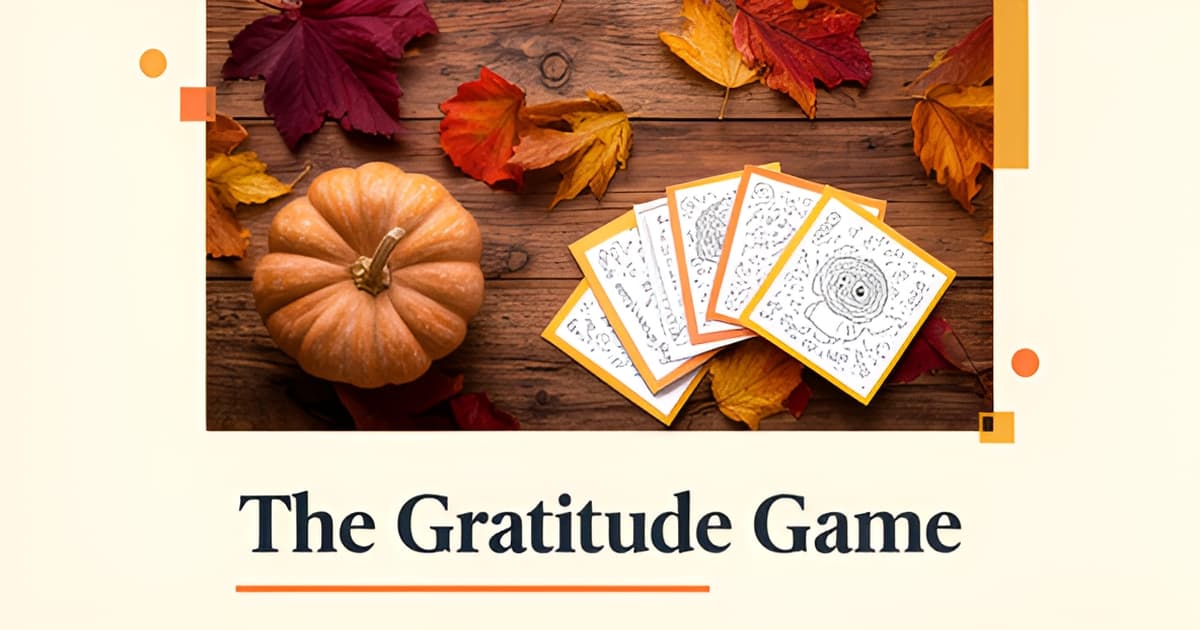
What is the gratitude game for Thanksgiving?
Key Facts
- A gratitude game is structured family time for thankfulness activities, best done by purposefully setting aside family time.
- Specific memories beat categories: 'my brother drove four hours to help me move' lands harder than 'I'm grateful for family,' says Adam Grodin of Grateful Peoples.
- Five proven gratitude game formats exist: ABC gratitude, dice or Skittle-color games, gratitude spotlight, guess-who-said-it, and drawing games.
- Gratitude activities lose their impact if done more than once a week, warns UC Berkeley's Greater Good Science Center.
- In hard years, swap 'what are you thankful for' for 'one thing that got me through,' because forced cheer does more harm than good.
- Sentence frames like 'I am grateful for ___ because ___' help kids and English Language Learners participate, according to Colorín Colorado.
- The 'Gratitude Spies' classroom game has students secretly observe a classmate all day, then share one grateful thing about that person.
Why Generic Gratitude Falls Flat at the Table
You've been there. Someone says "I'm grateful for family," everyone nods politely, and the round fizzles before the turkey is even carved.
The problem isn't gratitude itself. It's that generic statements give people nothing to hold onto. As Adam Grodin of Grateful Peoples puts it, "I'm grateful for my family" is a category, while "I'm grateful my brother drove four hours to help me move in July" is a memory people carry. Specificity is what makes it work.
A category invites a nod. A memory invites a story. When your uncle mentions the four-hour drive, someone asks why, and suddenly the table is talking, laughing, and remembering together. That's the moment a gratitude activity is supposed to create, and vague prompts almost never get you there.
There's a second problem: going around the table with no structure at all puts people on the spot. The quiet cousin freezes. The teenager mumbles something to get it over with. And in harder years, mandating cheerfulness can backfire. Grodin's advice is blunt: forced cheer does more harm than good, yet skipping gratitude entirely isn't the answer either.
What actually works is a middle path: light structure with prompts specific enough to spark real memories. Family activity guides consistently find that purposefully setting aside time for structured gratitude activities works better than an open-ended "share what you're thankful for." The format does the heavy lifting.
Good prompts share a few traits:
- They ask for a specific moment, not a category ("a time someone helped you this year," not "family")
- They lower the bar when needed, with options like "one thing that got me through"
- They let people participate without being put on the spot, through written cards or guessing games
- They stay occasional rather than daily, since research cited by UC Berkeley's Greater Good Science Center shows gratitude activities lose their impact with overuse
This is exactly why the gratitude game exists as a format, and why printable versions work so well. A set of prompt cards gives everyone the same gentle starting point. If you're building a full activity table for the day, you can pair your gratitude round with a thanksgiving trivia board game, a thanksgiving maze for the kids, or thanksgiving trivia cards to keep the conversation flowing between courses. Printoodle users can generate these as print-ready pages in seconds, so the setup costs you nothing but a click and a printer.
The takeaway: don't ask people to feel grateful. Ask them to remember something. The gratitude follows on its own.
How the Gratitude Game Actually Works: 5 Formats to Try
At its core, the gratitude game is simple: you set aside structured family time for gratitude-focused activities. As Christian Parenting puts it, purposefully carving out that time is one of the best ways to celebrate Thanksgiving and teach kids gratitude in real time. The "game" part matters, because play lowers the barrier for kids (and reluctant uncles) who'd never sit still for a lecture on thankfulness.
The research points to five formats that consistently work for real families. Pick one, or run two back to back while the turkey rests.
- ABC gratitude: go through the alphabet, naming something you're thankful for at each letter. "A" for apple pie, "B" for Grandma Betty.
- Dice or Skittle-color games: each color or number maps to a category. Per Manual RedEye, each Skittle color correlates with an experience, place, person, skill, or memory.
- Gratitude spotlight: one person gets the floor while everyone else shares something specific about them.
- Guess-who-said-it matching: everyone writes a gratitude statement anonymously, then the group matches statements to people. This one needs cards, which is where a printer comes in.
- Drawing games: sketch what you're thankful for and let the family guess.
Whatever format you choose, push for specifics. The Grateful Peoples guide cites research showing that "I'm grateful for my family" is just a category, while "my brother drove four hours to help me move in July" is a memory people actually carry. As Adam Grodin puts it, "Specificity is what makes it work."
If you want ready-made cards instead of index cards and markers, you can generate custom ones on Printoodle in a few seconds: type your prompts, spend a credit, and download a print-ready PDF. You can even pair your gratitude round with a thanksgiving trivia board game, a thanksgiving trivia deck, or a thanksgiving maze for the kids' table.
The Greater Good Science Center describes a classroom variant called Gratitude Spies, where each child draws a classmate's name, secretly observes them all day, then shares one thing they're grateful for about that person. It works beautifully, with one caveat: limit the activity to about once a week. According to research cited by Greater Good, gratitude activities lose their impact when done more often. Save the game for Thanksgiving week, and it'll land every time.
Making It Work for Your Crowd: Hard Years, Shy Kids, and Classrooms
The best-laid gratitude plans meet reality fast: a grieving grandparent at the table, a seven-year-old who won't speak up, a classroom where four home languages share one rug. Facilitation, not the game itself, decides whether the activity lands.
In a hard year, lower the bar. Adam Grodin, quoted by Grateful Peoples, is blunt about it: "Forced cheer on those years does more harm than good, and skipping gratitude entirely isn't the answer either." Swap "what are you thankful for" for prompts like "one thing that got me through this year." Someone might name a podcast, a neighbor, or Tuesday night takeout. That still counts, and it's honest.
Shy kids and quiet adults need an opt-in, not a spotlight. Let reluctant participants pass, write answers on cards instead of saying them aloud, or join as listeners. A Greater Good Science Center classroom game works exactly this way: each child draws a classmate's name, secretly "spies" on them during the day, then shares one thing they're grateful for about that person. The focus stays off the speaker, which is precisely why quiet students lean in.
For multilingual families and young children, sentence frames do the heavy lifting. Colorín Colorado describes gratitude activities as powerful tools for engaging English Language Learners, and recommends frames like "I am grateful for ___ because ___." A frame gives everyone the same on-ramp, whether they're five years old or navigating a second language. A few practical adjustments cover most crowds:
- Offer a choice of prompts rather than one question, so people pick what they can actually answer.
- Let anyone answer on paper, a sticky note, or a drawn picture instead of out loud.
- Keep it to once a week. Greater Good's experts warn that gratitude activities lose their impact if run more often, so save the game for Thanksgiving itself.
Teachers have one extra lever: keep it concrete. "I'm grateful for my family" is a category; "I'm grateful my brother drove four hours to help me move" is a memory. Grodin's point that specificity is what makes it work applies double in a classroom, where generic answers are the default. Ask for a person, a moment, or a small act.
Printing helps more than you'd think. Written cards level the playing field for shy kids, and a thanksgiving trivia board game or a quick thanksgiving trivia round gives people something to do with their hands while they decide whether to share. Younger siblings stay busy with a thanksgiving maze while the older kids take their turns.
The goal isn't a tearful circle. It's one specific, true sentence from each person who wants to give one. Print it, doodle it, done.
How to Generate Custom Gratitude Game Cards with Printoodle
Once you understand what is the gratitude game for Thanksgiving, the next step is making cards that actually fit your family. Generic prompts like "I'm grateful for family" get one-word answers. Gratitude researchers point out that a category is forgettable, while a specific memory ("my brother drove four hours to help me move") is what people carry with them. As gratitude game designer Adam Grodin puts it, "Specificity is what makes it work."
That's exactly why Printoodle's generators let you write your own prompts instead of settling for defaults.
The core prompt that research supports is simple: "I'm grateful for ___ because ___." The "because" clause forces the specificity that makes gratitude games land emotionally. When you build cards in Printoodle, you type that frame into a short brief, add any theme details you want (names, inside jokes, this year's host), spend a few credits, and download a print-ready PDF. Letter is the default size, with an A4 toggle if you're printing outside North America.
Here's the basic flow:
- Pick your format: gratitude cards, trivia prompts, or a bingo-style grid where squares get filled as people share.
- Write your brief with sentence frames like "I'm grateful for ___ because ___," or upload a photo or document if you want the cards built around something specific.
- Spend credits to generate. New accounts get 10 free credits after email verification, and credit packs start at $5.
- Download the PDF and print at home on standard paper. Everything you make lives in your library, so reprints are always free.
Free reprints matter more than they sound. One popular variation, "Guess who said it!", requires a printer because guests write answers on cards, then everyone guesses who wrote what. With free reprints, you can regenerate a fresh deck every year without starting over.
If you're hosting a table full of kids, pair the gratitude cards with companions that keep small hands busy between courses. A thanksgiving trivia board game works well as a whole-table activity, while a thanksgiving maze is the right pace for a four-year-old waiting for pie. Older kids who like competition tend to gravitate toward thanksgiving trivia prompts you can generate from your own family facts.
One practical tip from the research: gratitude activities lose their impact when overused. The Greater Good Science Center at UC Berkeley notes that gratitude exercises should be limited to about once a week, because repetition dulls the effect. So don't turn these cards into a daily ritual. Save them for Thanksgiving week, when they'll carry the most weight.
And if this year has been a hard one, lower the bar on purpose. Prompts like "one thing that got me through" invite honesty instead of forced cheer, which experts say does more harm than good. The beauty of writing your own brief is that you can tune every card to the room you're actually hosting.
Print it. Doodle it. Done.
One Specific Sentence Is All It Takes
So, what is the gratitude game for Thanksgiving? It's structured play that asks people to remember something specific instead of performing thankfulness on command. The research-backed recipe is simple: pick a format that fits your crowd, ABC gratitude, dice games, guess-who-said-it, keep prompts concrete with frames like "I'm grateful for ___ because ___," lower the bar in hard years, and save the game for Thanksgiving week so it keeps its punch. Your next step takes five minutes: choose a format, write three or four specific prompts tailored to your table, and print a deck before Thursday. Pair it with a thanksgiving trivia board game, a thanksgiving maze for the little ones, or a round of thanksgiving trivia between courses, and you've got a full activity table with one click and a printer. Printoodle's generators make the cards yours, your prompts, your family's inside jokes, and reprints stay free forever, so next November you're already set. Print it. Doodle it. Done.