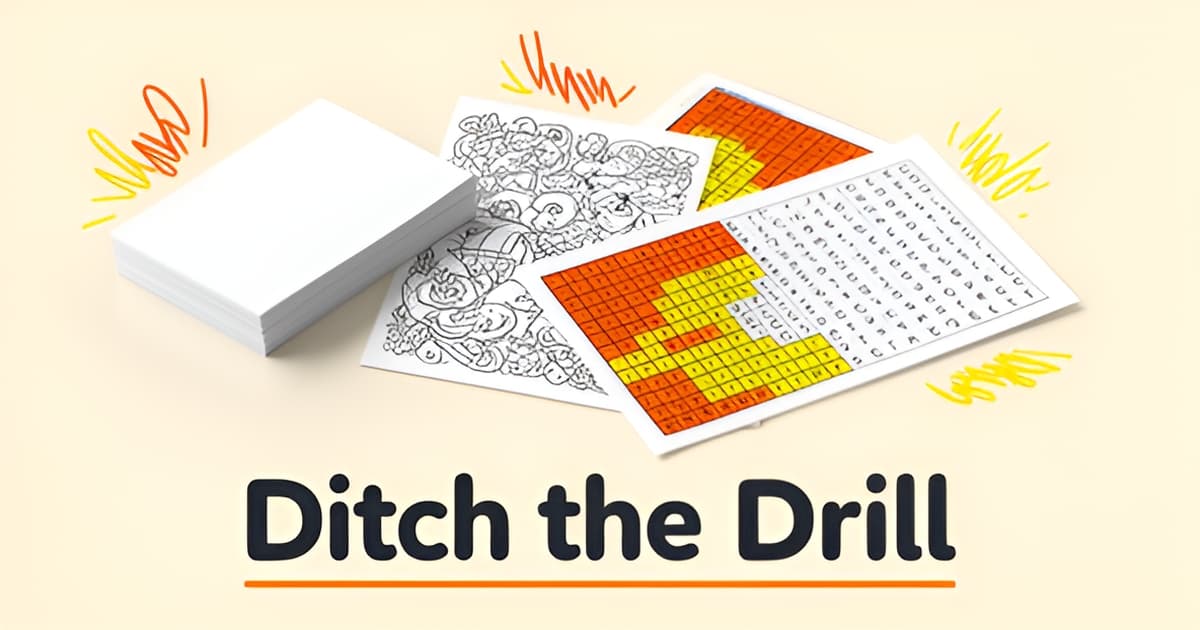
What to do instead of flashcards?
Key Facts
- Flashcards fail on motivation, not memory, as one analysis put it, "the science is not the problem, the interface is".
- UK medical students rated electronic flashcards 4.03 out of 5 for effectiveness in a peer-reviewed study.
- Students who added personal real-world examples to flashcards scored significantly higher on exams in two 2017 studies, per University of Michigan research.
- Knowt claims 5 million students and teachers have switched from Quizlet, showing massive demand for auto-generated study materials.
- NEA Today reports traditional print-based methods promote certain kinds of learning better than digital ones.
- Knowt's vendor materials claim its AI tools save teachers 10+ hours a week.
- A meta-analysis found gamification boosts learning only when game mechanics support effortful practice, not replace it.
Why Flashcards Fail (It's the Format, Not the Science)
Every flashcard deck starts with the same burst of optimism. You make thirty cards on Sunday night, review them twice, feel like a study machine... and by the following Friday the deck sits untouched while guilt quietly accumulates. If you're wondering what to do instead of flashcards, the honest answer starts with understanding why the deck died in the first place.
Here's the uncomfortable truth: the memory science behind flashcards is rock solid. Active recall and spaced repetition are proven high-utility study techniques, backed by peer-reviewed research. UK medical students rated electronic flashcards 4.03 out of 5 for effectiveness in their coursework. The technique works when people actually use it.
The problem is that most people don't keep using it. As one analysis of why learners abandon flashcard apps put it, "the science is not the problem, the interface is". Spaced repetition feels like homework. Reddit users consistently report that Anki works but is so boring they kept missing days, and skipping even a few sessions creates a review backlog so large it crushes motivation. Once the backlog wins, the deck is dead. No algorithm can help you remember words you never see.
The failure pattern is predictable enough to name:
- A grind of isolated, repetitive cards that offers no context or story
- Review queues that punish you for missing a day, so you miss more
- Generic content with no personal connection to the learner
- Hours of manual card-writing before studying even begins
A Columbia University review flagged this same weakness across learning apps: isolated vocabulary units with limited corrective feedback, when the best alternatives embed words in sentences, stories, and games. Retrieval practice itself isn't the issue. The format delivering it is.
That's the case for rethinking the delivery rather than the technique. The University of Michigan's Flashcards-Plus research found that adding a personal real-world example to each card engages three levels of retrieval practice: retention, comprehension, and application. Students using the technique scored significantly higher on exams. Personalization, in other words, is not decoration. It's the upgrade.
This is where a different approach helps. Tools like Printoodle generate personalized, print-ready worksheets and even sight word flashcards from your own material in seconds, so the retrieval practice stays but the grind goes. You get the tactile, screen-free benefits of paper with content built around the actual learner: their name, their word list, their interests.
The fix isn't abandoning active recall. It's removing everything that makes you quit. Print it, doodle it, done.
What Makes a Good Flashcard Alternative: Keep the Recall, Lose the Drill
The science of active recall is settled: students who practice retrieval remember more than those who re-read. But the interface often breaks the habit. Research confirms that when study tools "feel like homework," users quit, and no algorithm can compensate for missed sessions.
Personalization changes the equation. A University of Michigan study on the Flashcards-Plus technique found that adding personal real-world examples engages three levels of retrieval, retention, comprehension, and application, and measurably raised exam scores in Senzaki et al.’s 2017 studies. The same principle applies to printable worksheets: when a child sees their own name or photo integrated into the activity, the practice feels meaningful rather than mechanical.
The picture superiority effect further supports this shift. Studies show that people remember images plus words better than words alone, which is why formats like color-by-number and themed word searches hold attention longer than plain cards. A Columbia University review cited by WIRED also found that the most effective alternatives embed vocabulary in sentences, stories, or games rather than isolating units on a card.
Game-format worksheets preserve effortful retrieval without the drill. Word searches, crosswords, and trivia cards require the brain to pull information forward, but the game mechanics support that practice rather than replacing it with passive matching. This is the gap Printoodle fills: AI-generated, print-ready worksheets that replace traditional flashcards with activities grounded in learning science. Whether generating sight word flashcards or custom trivia from a family trip, the platform turns notes into printable practice in seconds.
Printoodle lets anyone upload a photo, document, or brief prompt and download a personalized PDF ready for printing. Free tier includes 10 credits on signup; credit packs start at $5, and reprints are free forever.
5 Alternatives That Actually Work Better Than Flashcards
If you're wondering what to do instead of flashcards, the answer isn't abandoning retrieval practice. It's hiding it inside formats kids actually want to do. The best alternatives share one trait: the child has to pull information out of memory to play, which is exactly what a meta-analysis of gamification found separates real learning gains from digital busywork.
1. Word searches and crosswords built from your child's own words. A generic puzzle practices random vocabulary. One built from this week's spelling list or the dinosaur names your kid already loves practices the words that matter. In two 2017 studies, students who added personal, real-world connections to their flashcards scored significantly higher on exams than peers who didn't. Personalization is the upgrade, and a puzzle with your child's name hidden in the grid delivers it.
2. Bingo and trivia cards for group recall. These work because retrieval happens socially. The child isn't sitting alone with a deck; they're scanning their memory while the whole table plays. That fixes the real failure mode of flashcards, which research suggests is motivation collapse, not memory science. As one analysis put it, "the science is not the problem, the interface is."
3. Photo-based activities. Turn the family dog into a coloring page or a pixel mystery picture, and you get the picture superiority effect working for you: people remember images plus words better than words alone. Print keeps another advantage. Physical materials offer a tactile experience and a break from screen distractions, which is part of why NEA reporting says old-school methods can promote certain kinds of learning better than digital ones.
4. Personalized sight word materials. Sometimes you genuinely want flashcard-style content, just faster and tailored. That's where a tool like Printoodle's sight word flashcards generator fits: type in your child's word list and get a print-ready page in seconds, no hours spent writing cards by hand. It's the same trend driving millions of students toward auto-generated study materials, applied to paper.
5. Any format that requires production, not recognition. A quick checklist for judging an activity:
- Does the child have to produce the answer, not just recognize it?
- Does it connect to something personal: their name, their pet, their interests?
- Would they do it voluntarily on a rainy Saturday?
- Does it work away from a screen?
Effortful retrieval in a playful wrapper is the whole formula. Each format above keeps the part of flashcards that works and discards the part that makes kids quit by Tuesday.
How to Create Personalized Alternatives in Minutes (Teacher and Parent Workflow)
Here's the thing about homemade flashcard alternatives: most people already know they'd work better. The problem is that cutting, writing, and laminating twenty cards on a Tuesday night is nobody's idea of fun, and that's exactly why so many good ideas die in the craft drawer.
The market has noticed. AI study tools like Knowt pitch the promise bluntly: you'll "never have to spend hours writing down flashcards again." Knowt claims 5 million students and teachers have switched from Quizlet, and its vendor materials say its tools save teachers 10+ hours a week. Those numbers are self-reported, but the demand is real. Educators want materials generated from their own content, in seconds.
The NEA agrees, with a caveat. According to NEA Today, AI tools "can be excellent time-savers for educators" when used thoughtfully, including for creating worksheets and learning artifacts. The same article reports something else worth pausing on: research suggests traditional, print-based methods promote certain kinds of learning better than digital ones. Print offers a tactile experience and a break from screen distractions, which the University of Michigan's teaching resources also cite as a genuine benefit of physical study materials.
So the ideal workflow for figuring out what to do instead of flashcards is really a hybrid: AI does the creation, paper does the teaching. Here's how that looks with Printoodle:
- Upload your source material. A short brief, a photo, or your actual lesson content. A teacher can feed in this week's vocabulary; a parent can type "dinosaur words for a 6-year-old."
- Generate the activity. The tool builds a personalized page around your input, so the child's own material drives the retrieval practice.
- Download the print-ready PDF. Letter by default, A4 with a toggle, ready for any home printer.
- Reprint for free, forever. Everything you make lives in your library, so next year's class or the next rainy afternoon costs nothing extra.
The personalization part matters more than it sounds. University of Michigan research on the "Flashcards-Plus" technique found that adding a personal real-world example to each term engages three levels of retrieval practice: retention, comprehension, and application. A worksheet built around your child's name, their pet, or their current obsession is that principle in action. If you still want a flashcard-style format, you can generate sight word flashcards the same way, personalized instead of generic.
Print it. Doodle it. Done.
Frequently Asked Questions
Are flashcards actually bad for learning, or do they work?
Why do I keep abandoning my flashcard decks after a few days?
What makes a good alternative to flashcards?
Does personalizing study materials really make a difference?
Why choose printable worksheets over digital study apps?
I still want flashcard-style content, is there a faster way to make it?
Keep the Recall, Ditch the Guilt
So, what to do instead of flashcards? Not something entirely different, something better packaged. The memory science behind active recall is solid; what fails is the format that makes learners quit by Tuesday. The winning alternatives all share one formula: effortful retrieval wrapped in play, personalized to the actual learner. A word search built from this week's spelling list, a bingo game the whole table plays, a coloring page of the family dog, each keeps the part of flashcards that works and drops the part that kills motivation. Your next step is simple: pick one word list or topic your child or class is already working on, and turn it into a game-format activity they'd choose on a rainy Saturday. If you still want flashcard-style practice, personalized instead of generic, try generating sight word flashcards with Printoodle, upload your material, get a print-ready PDF in seconds, and reprint for free forever. Print it. Doodle it. Done.