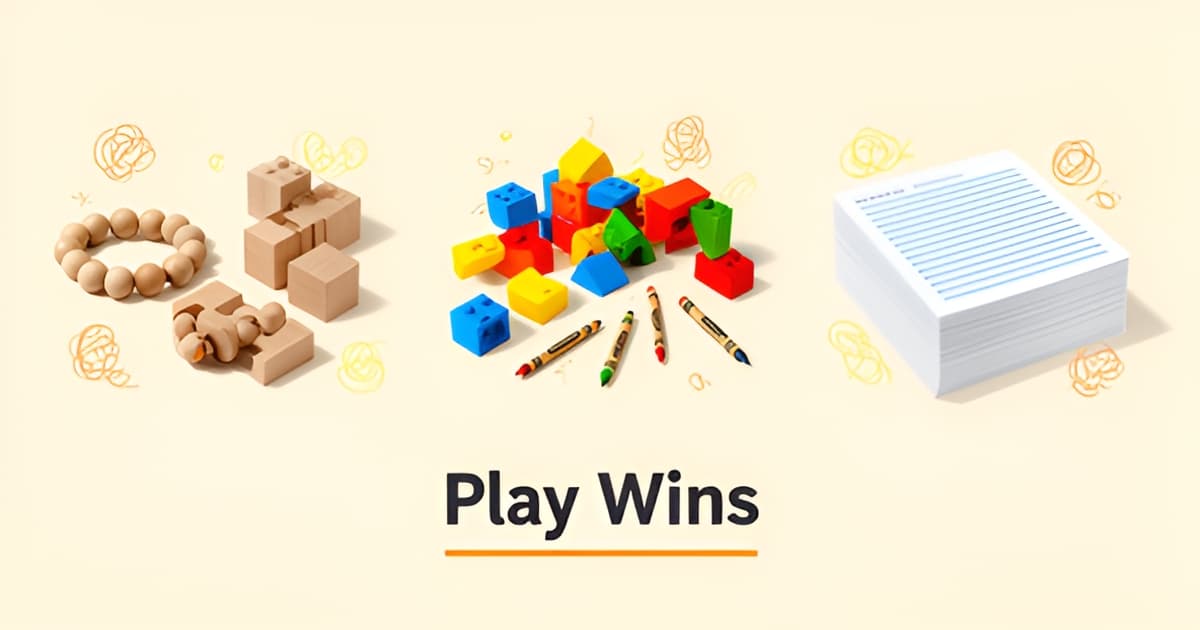
Which teaching method is best for kindergarten?
Key Facts
- Program quality beats philosophy: a high-quality conventional program outperforms a low-quality Montessori one on virtually every measured outcome, preschool outcome research finds.
- In Angeline Lillard's 2006 Science study, Montessori children outperformed peers by age 5 on executive function, reading, math, and social problem-solving.
- Early academic advantages fade: test score gains from preschool programs typically converge by grades 3-4, longitudinal research shows.
- Authentic Montessori costs $12,000-$25,000 per year, and over $30,000 in major metros, creating significant equity barriers for families.
- A meta-analysis of 203 studies of 30,521 children ages 3-6 found physical activity boosts cognitive, social, and behavioral development.
- A study of 562 Norwegian preschoolers linked outdoor time to stronger executive functions and fewer inattention-hyperactivity symptoms.
- Fewer than 75% of families read to preschoolers three or more times weekly; each 10 books at home raises frequent-reading odds by 8%.
The Kindergarten Method Maze: Why Parents and Teachers Can't Get a Straight Answer
The kindergarten landscape is a maze of competing philosophies, each claiming to hold the key to a child's future success. Parents touring schools are greeted by glossy brochures touting Montessori's independence, traditional programs' structure, and play-based models' child-led exploration, all while price tags ranging from $12,000 to $25,000 annually for authentic Montessori options make the decision feel high-stakes. The reality, however, is that no single method emerges as universally superior; research consistently shows that the quality of implementation matters far more than the philosophical label attached to the classroom.
A comprehensive analysis of early childhood education research reveals that play-based learning serves as the foundational strategy for kindergarten success across multiple methodologies. Studies indicate that this approach strengthens language development, problem-solving abilities, and social-emotional skills, with one expert source noting that "play isn't a break from learning, it is learning." This perspective is supported by data showing that preschoolers learn primarily through exploration and interaction rather than lectures or isolated worksheet tasks. However, the research also presents a critical finding: a high-quality conventional program will outperform a low-quality Montessori one on virtually every measured outcome, suggesting that teacher engagement and classroom environment are the true determinants of student success.
The Montessori approach does show specific advantages, particularly in executive function and early literacy, with one landmark study finding that by age five, Montessori children outperformed peers on these metrics. Yet these advantages often fade by elementary school when quality is held constant, and most children converge with high-quality conventional programs by middle school. This "fade-out" phenomenon is well-documented in longitudinal research, though non-academic effects such as social skills and graduation rates tend to persist. Compounding these findings is the significant equity barrier created by cost; authentic Montessori programs typically range from $12,000 to $25,000 per year, with prices exceeding $30,000 in major metropolitan areas, making outcome comparisons socioeconomically confounded and access limited for many families.
Beyond the method itself, a systemic divide between early learning programs and the formal K-12 school system creates barriers to effective implementation regardless of philosophy. Research into kindergarten transition strategies identifies this historic gap as the primary obstacle, emphasizing that comprehensive approaches involving cross-system coordination, family engagement, and dedicated staff for family outreach are more critical than the specific teaching methodology employed. For educators and parents navigating these choices, the consensus is clear: prioritizing program quality, implementation fidelity, and a play-based foundation provides the most reliable path to kindergarten success, rather than chasing a philosophical ideal.
To support this evidence-based approach, Printoodle offers tools designed to reinforce play-based learning rather than replace it. Customizable resources such as kindergarten sight words activities, kindergarten writing paper templates, and kindergarten maze printables allow educators and parents to scaffold academic concepts within engaging, hands-on contexts. These printable materials can be adapted to individual student needs, differentiating difficulty levels to support mixed-ability classrooms while maintaining the play-focused environment that research identifies as most effective.
Print it. Doodle it. Done.
If you are looking for ways to integrate structured practice into a play-based kindergarten day, Printoodle’s library of free samples makes it easy to try before you commit. Generate custom sight word games, handwriting sheets, or puzzle activities in seconds and see how they fit your classroom or home learning space.
What the Research Actually Shows: Quality Beats Philosophy
So which teaching method actually wins? The honest answer is that the question itself is slightly wrong. Across the major studies, program quality consistently matters more than the label on the classroom door.
That said, the evidence does lean somewhere. Play-based learning is the most widely supported foundation for kindergarten, with research showing it strengthens language development, problem-solving, and social-emotional skills. As one summary of early childhood strategies puts it, "play isn't a break from learning, it is learning." Language development at this age is also one of the strongest predictors of later reading success.
The Montessori data is more nuanced. In Angeline Lillard's 2006 study published in Science, Montessori children outperformed peers by age 5 on executive function, early reading and math, and social problem-solving. Some advantages persisted at age 12, though attenuated. But the key caveat: when researchers hold program quality constant, these advantages largely disappear, and most outcomes converge with high-quality conventional programs by middle school. A review of preschool outcome research concludes bluntly that "a high-quality conventional program will outperform a low-quality Montessori one on virtually every measured outcome."
There's also the fade-out phenomenon to consider. Test score advantages from any early program tend to converge by grades 3 to 4. What persists are the non-academic effects: social skills, graduation rates, later earnings. This is why chasing a method for its short-term academic edge is often a losing bet.
A few practical takeaways for parents and teachers:
- Judge the classroom, not the philosophy. Teacher responsiveness, ratios, and implementation quality predict outcomes better than the method's name.
- Use printables to scaffold play, not replace it. A kindergarten sight words game or a kindergarten maze printable works best when it extends an activity a child already cares about.
- Keep structured literacy small and multi-sensory. The sightwords.com sequence (See & Say, Arm Tapping, Air Writing, Table Writing) recommends no more than three unfamiliar words at a time.
- Differentiate for mixed abilities. Print different-level words on different colored paper so every child plays the same game at their own level.
This is also where tools like Printoodle earn their keep. Because you can generate kindergarten writing paper with the line spacing your specific group needs, or sight word pages from your own word list, the materials adapt to the child rather than the other way around. Quality lives in the details of implementation, and customizable materials make those details easier to get right.
The bottom line: pick a play-based foundation, then invest your energy in how well it's delivered.
The Winning Approach: Play-Based Learning With Purposeful Structure
The research is clear: play remains the primary engine of learning in kindergarten, but the most effective programs layer structured practice into the day without letting it overshadow exploration. Studies of 562 Norwegian preschoolers found a positive association between time spent outdoors and executive functions, while also noting a negative link between outdoor time and inattention-hyperactivity symptoms. This evidence supports what many educators already observe, that movement and connection to nature sharpen focus, but the real leverage comes from how that energy is channeled.
A landmark meta-analysis of 203 studies involving 30,521 children ages 3 to 6 reinforced this balance. Physical activity interventions improved overall physical literacy, with the strongest gains in the physical domain and smaller but meaningful positive effects in cognitive, affective, social, and behavioral areas. The takeaway is that movement isn't a separate subject; it's a catalyst for broader development.
Within a play-based framework, intentional multi-sensory routines provide the structure children need to internalize foundational skills. The five-technique sight word sequence, See & Say, Spell Reading, Arm Tapping, Air Writing, Table Writing, works because it activates different parts of the brain through seeing, hearing, speaking, spelling, and writing with physical movement. Research on Dolch Pre-Kindergarten lists supports starting with just three unfamiliar words at a time, reviewing prior words at the start of each lesson to build solid knowledge rather than weak familiarity with many words.
Printoodle’s customizable tools make it easy to layer this kind of structured practice into a play-based day. Teachers can generate kindergarten sight words cards, kindergarten writing paper with appropriate line spacing, or kindergarten maze printable activities that adapt to individual reading levels. A child who is not yet ready for independent writing can trace letters on air writing cards, while a peer works at a table writing station, both engaging with the same skill at their level.
When play leads and structure follows, kindergarten becomes both joyful and rigorous. The data shows that children thrive when movement, nature, and intentional practice coexist rather than compete. Print it. Doodle it. Done.
How to Differentiate for a Mixed-Ability Kindergarten Classroom
Ask any kindergarten teacher what makes planning hard, and it's rarely the curriculum. It's the spread: one child is reading sentences, another is still learning to hold a pencil, and both are sitting in the same room on the same Tuesday. That range is exactly why the question of which teaching method is best for kindergarten has no single answer, and why differentiation matters more than the label on your approach.
The research backs this up. According to the Innovative Schools Summit, one-size-fits-all teaching is impossible at this age because of widely varying rates of language and motor skill development. Kids learn language through exposure and repetition, not lectures or worksheets, so the goal is to keep every child engaged in the same activity while adjusting the difficulty underneath it.
A practical, research-endorsed move is customizing materials by level. The Sight Words teaching strategy recommends printing different-level words on different colored paper so all children play the same game at their own level. It also advises working on no more than three unfamiliar words at a time and reviewing prior words at the start of each lesson, because solid knowledge of a few words beats weak knowledge of many.
That's where tools like Printoodle earn their keep. Instead of hunting for three versions of the same activity, you can generate:
- kindergarten sight words games built from your own leveled word lists, so each reading group gets a puzzle matched to where they actually are
- kindergarten writing paper with adjustable line spacing, giving emerging writers wider guides while confident writers move to tighter lines
- kindergarten maze printable pages at varying difficulty, so the whole class can race the same maze at their own challenge level
The key is that printables support play and scaffolding rather than replace them. Every child holds the same activity; the level inside it is what changes. A child who finishes early can swap colored paper for a harder list. A child who struggles gets the same game with fewer, simpler words and no stigma attached, because the differentiation is invisible, baked into the material rather than announced to the room.
This is also the quality-over-philosophy principle in action. Research comparing preschool approaches, including the Lillard study and NICHD findings, concludes that a high-quality conventional program will outperform a low-quality Montessori one on virtually every measured outcome. Differentiated materials are one of the clearest markers of quality implementation, whatever method you follow.
Print it. Doodle it. Done.
Your Week-With-It Plan: Putting a High-Quality Method Into Practice
Designing a kindergarten week that honors how young children actually learn means moving beyond theoretical debates and into the classroom rhythms where real growth happens. Research consistently shows that play remains the foundational strategy for this age group, strengthening language development, problem-solving, and social-emotional skills more effectively than any lecture or isolated worksheet could. However, the data also makes one thing clear: program quality outweighs methodological philosophy every time. A high-quality conventional program will outperform a low-quality Montessori one on virtually every measured outcome, which means the "best" method is the one implemented with consistency and care.
For sight word instruction, a multi-sensory approach activates different parts of the brain and builds solid knowledge gradually. The recommended sequence starts with no more than three new words at a time, reviewing prior words at the start of each lesson to reinforce retention. This structured supplement works best when embedded within play contexts rather than treated as a standalone drill. Printable materials can serve as effective scaffolds in this space, customizable word searches, tracing cards, and matching games allow all children in a mixed-ability classroom to engage with the same activity at their own level, with different word lists printed on colored paper to support differentiation without creating visible segregation.
Beyond literacy, the transition into kindergarten presents the greatest systemic challenge. The historic divide between early learning programs and the formal K-12 school system creates barriers that will require years of dedicated effort to truly establish a smooth crossing. Comprehensive transition approaches involving cross-grade communication, family engagement, and staff dedicated to outreach are more critical than the specific teaching methodology employed. Visual schedules and family engagement materials printed on demand can bridge this gap, giving children predictable routines at school and parents the tools to reinforce them at home.
Printoodle supports this practical approach by letting teachers and parents generate differentiated, print-ready resources in seconds. Whether you need kindergarten sight words cards, kindergarten writing paper with proper line spacing, or a kindergarten maze printable to strengthen fine motor skills, the platform turns a short brief into a PDF ready for the classroom. Print it. Doodle it. Done.
kindergarten sight words, kindergarten writing paper, and kindergarten maze printable are just a few of the tools available to bring these strategies to life.
Frequently Asked Questions
Is Montessori really better than a regular kindergarten program?
So which teaching method is best for kindergarten overall?
Do the academic advantages of any preschool method last long-term?
Is Montessori worth the cost for kindergarten?
How many new sight words should my kindergartner learn at a time?
Are worksheets okay in kindergarten, or should everything be play?
The Verdict: Great Teaching Beats the Perfect Label
So, which teaching method is best for kindergarten? The research gives a refreshing answer: stop hunting for a philosophical winner and start investing in quality. Play-based learning is the most reliable foundation, strengthening language, problem-solving, and social-emotional skills, while a high-quality conventional program outperforms a low-quality Montessori one on virtually every measured outcome. Even Montessori's early advantages in executive function and literacy tend to fade by grades 3 to 4 once quality is held constant. What persists are the deeper gains, social skills, engagement, and a genuine love of learning. Your next step is practical, not philosophical: observe the classroom, not the brochure, and layer structured practice into play in small, multi-sensory doses. That's where Printoodle fits naturally, generate custom kindergarten sight words games, kindergarten writing paper with the right line spacing, or a kindergarten maze printable at each child's level, in seconds. Try the free samples and see how easily quality implementation comes together. Print it. Doodle it. Done.