How to play birthday bingo?
Key Facts
- Birthday bingo is playable by kids as young as 3 with adult help, using picture cards instead of numbers according to children's activity guides.
- A standard birthday bingo card holds 25 squares in a 5×5 grid, won by completing 5 in a row horizontally, vertically, or diagonally per bingo card design experts.
- The game works for groups of 2 to 10 players, with the youngest player drawing first and play continuing clockwise per party craft guides.
- Hosts can choose from 4 core formats: called games, observation bingo, activity cards, and question cards according to bingo format guides.
- One photo bingo party used 42 images matching the guest of honor's age, 12 unique cards, and a 2'×6' calling banner per a first-hand party recap.
- Time-pressure variations challenge players to score 5 in a row within 5 or 8 minutes for added excitement per kids' activity research.
- Event planners recommend saving one coveted grand prize for a high-value finale round to keep everyone engaged until the end according to bingo event experts.
The Core Rules Every Host Needs
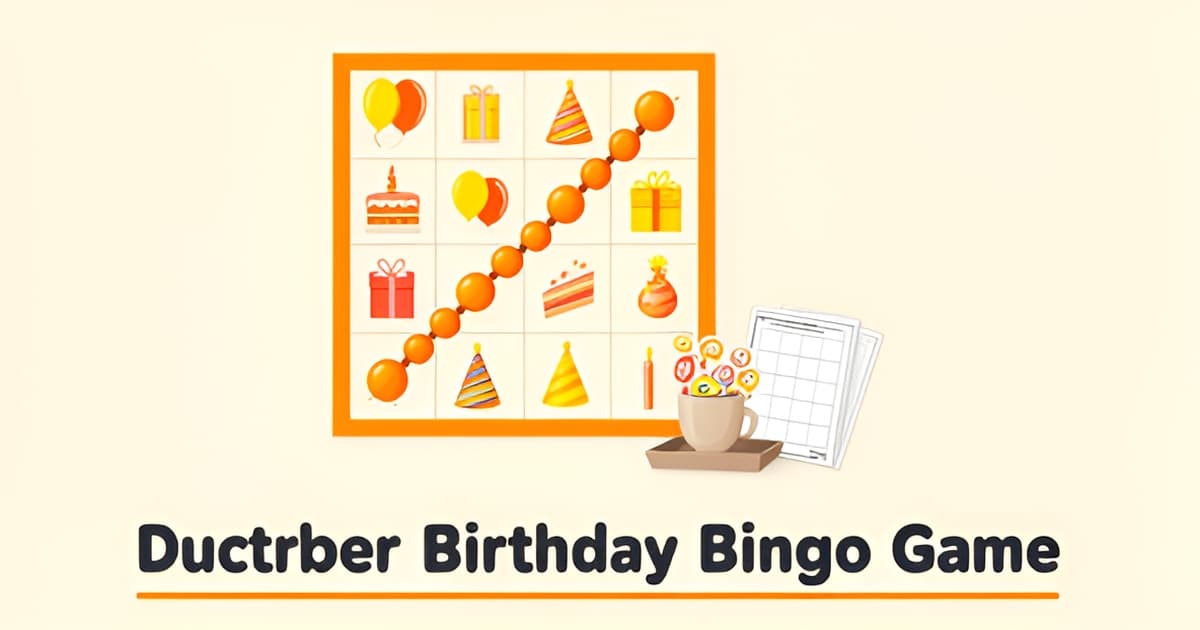
The classic 5×5 grid forms the backbone of every birthday bingo round. Each player receives a card filled with twenty-five themed pictures, balloons, candles, wrapped gifts, or cupcakes, instead of the traditional number sequence. The caller begins by drawing one motif card from the container, announcing the image aloud, and placing it face-up in the center for all to see. Players scan their own cards and place a marker, be it a candy piece or a glass token, on the matching square. The first participant to complete a straight line of five marked pictures, horizontally, vertically, or diagonally, shouts "Bingo!" to claim the round. Research confirms that showing the drawn image to the group helps younger children identify the object, making the game accessible even to guests as young as three years old.
The round structure follows a simple, fair loop. Before the first card is handed out, the host should announce the winning pattern, for example, a straight line or the four corners, so every player knows the goal. As each new card is drawn from the bag, the caller reveals the picture to the table. The winner must call "Bingo!" before the next motif is announced; otherwise, the claim carries over to the next round. Studies suggest ending the game once every child has achieved a bingo, rather than clearing cards after each win, keeps the mood light and ensures no guest leaves empty-handed. Prizes can range from a small toy or a piece of candy to a themed gift basket tailored to the birthday child’s interests, with edible markers like Skittles or M&Ms doubling as both game pieces and take-home treats.
- Print cards on heavyweight card stock for durability, or use regular paper for a one-time disposable set.
- Keep a mix of marker types on hand, candy, LEGO bricks, or painted rocks all work well.
- Laminate the boards and use dry-erase markers if you plan to host multiple parties.
- Store all twenty-five motif cards in an opaque bag or bowl and mix them thoroughly before each round.
Armed with a printed card, a handful of markers, and a container of themed prompts, any guest can join the fun. Printoodle makes it easy to generate custom birthday bingo cards in seconds, plus grab matching birthday gift tags and a birthday word search to round out the celebration.
Game Formats and Age-Smart Variations
Birthday bingo swaps traditional numbers for themed pictures, words, or actions, turning a classic game into a celebration centerpiece. The core setup is simple: each player gets a 5×5 grid filled with birthday imagery, a caller draws a card from a bag, and players mark their squares. The first to complete a pre-announced pattern, usually a straight line horizontal, vertical, or diagonal, shouts "Bingo!" and claims a prize. Research confirms that keeping play fair for young participants means continuing until every child has won at least once, ensuring no one leaves empty-handed.
Four core formats give hosts flexibility depending on the party vibe. In a called game, the host announces items one by one, which works well for the youngest crowds. Observation bingo shifts the focus to real-time party events, like marking a square when the cake arrives or a toast is made. Activity cards turn the card into a to-do list, where a square only gets marked after the player completes a task, such as doing a silly dance or finding someone wearing a specific color. Question cards reveal answers one at a time, turning the game into a trivia-style challenge about the birthday child or party guests.
For kids aged three through ten plus, the game adapts easily to match developing skills. Younger children, ages three and up, benefit from familiar pictures and adult guidance; a 5-minute or 8-minute time-pressure round adds just enough excitement without frustration. As fine motor skills improve, children ages four to six can handle the standard five-in-a-row format, and the game is best played until every player achieves a bingo. Ages six and up can tackle the "explaining motifs" variation, where the player describes the drawn image in a short sentence rather than simply naming it. Older kids, eight and above, enjoy multi-row challenges and extra winning combinations, such as filling the four corners, forming an X, or spelling out the birthday child’s name across the card.
Prize ideas naturally align with the age group. For younger children, edible markers like Skittles or M&Ms double as both game pieces and take-home treats, while small toys or activity vouchers with the birthday child work well for slightly older kids. The research emphasizes fairness, recommending that markers be given to each child to keep after the game ends. Printoodle offers a range of complementary tools to finish the party activity spread, from customizable birthday bingo cards to matching birthday gift tags and a birthday word search, all designed to be generated and printed in seconds.
Generate your first set of cards for free with Printoodle’s birthday bingo card generator, then grab a set of birthday gift tags to pair with your prizes. For a full themed activity kit, try the birthday word search maker to keep the celebration going.
Prize Ideas That Keep Everyone Playing
Prizes are where a good bingo game becomes a great party memory. The right reward structure keeps energy high through every round, and a few tiered strategies make sure the excitement never flags.
Start small and edible. When you learn how to play birthday bingo with candy markers like M&Ms, Skittles, or Starbursts, every player is already holding a prize: they simply keep their sweet markers once the round ends. It's a low-cost way to guarantee that even the youngest guest walks away with something.
Next, offer small toys or vouchers for mid-game wins. Recommended options include sweets, small toys, and vouchers for an activity with the birthday child, like a special game or outing together. These mid-tier rewards work especially well when you keep playing until everyone wins once rather than stopping at the first "Bingo!", a tweak one party host found made the game "way more fun that way."
For themed parties, build prizes around the guest of honor's favorite things. One memorable photo bingo celebration featured an inflatable soccer ball, favorite chocolate bars, and a stuffed cheetah matching the birthday person's tastes. Display kids' prizes openly on a table so they can see what they're playing for; adults tend to prefer surprises, so gift bags work better there.
Cap the party with a grand finale round. Event planners recommend including one coveted grand prize and ending with a high-value finale round, which gives everyone a reason to stay engaged until the very end. Save your single best item for this round and make it a full-card or four-corners pattern so it takes a little longer to win.
Here's a quick tiered prize plan:
- Round 1: candy markers kids keep after the game
- Rounds 2-3: small toys or activity vouchers
- All rounds: guest-of-honor-themed items on open display
- Final round: one coveted grand prize
Above all, honor the fairness rule: no child goes home empty-handed. Children's activity guides are emphatic that all kids be treated fairly, whether through the keep-playing-until-everyone-wins approach or consolation prizes. If you're printing your own cards, a set of personalized birthday bingo cards paired with matching birthday gift tags for the prizes keeps the whole theme cohesive, and a birthday word search gives non-winners a fun backup activity.
Materials, Setup, and Reusable Play
Setting up a birthday bingo game is straightforward, but the right supplies make all the difference for a smooth, reusable experience. The essentials are printed bingo cards, markers for players to mark their squares, a container to hold the drawn items, and prizes for the winners. For hosts looking to reduce waste and cost, laminating the cards and using dry-erase markers allows the game to be wiped clean and played again at future celebrations. This durability means the initial investment lasts across multiple parties, making it a practical choice for regular hosts.
Printoodle supports this setup by offering tools to generate customized materials quickly. Hosts can use the birthday bingo cards tool to create unique 5×5 grids tailored to the party theme, grab matching birthday gift tags to extend the activity, or run a birthday word search to fill extra time between rounds. These resources fit naturally into a broader party activity lineup, ensuring guests have plenty to do beyond just the bingo game itself.
The core rules follow a familiar pattern: each player receives a card, a caller draws and announces a motif or image, and players mark their cards if they have that square. The first to complete an announced pattern, typically a straight line horizontally, vertically, or diagonally, calls "Bingo!" and claims the prize. Sources consistently emphasize fairness for children, recommending that play continue until every child achieves a bingo at least once, ensuring no one goes home empty-handed. Prize ideas range from sweets and small toys to themed gift baskets, with a popular low-cost option being edible markers like candy that children can keep after the game concludes.
For mixed-age groups, adapting the squares to familiar pictures and short phrases keeps the game accessible, while older children might enjoy variations like describing the drawn motif in a sentence. A common verification rule is that the winner must call "Bingo!" before the next number is drawn, and the caller should verify the card before awarding the prize. Whether using a classic called game or switching to an observation format where guests mark squares when events like cake arrival happen, the focus remains on inclusive, engaging fun.
Frequently Asked Questions
How do you actually play birthday bingo with kids?
What should the winning pattern be before starting a round?
How do you keep birthday bingo fair for all children at a party?
What kinds of prizes work best for birthday bingo?
Can birthday bingo be reused for multiple parties?
What materials are needed to set up a birthday bingo game?
Ready to Call "Bingo!" at Your Next Party?
Now you know how to play birthday bingo from every angle: the classic 5×5 picture grid, age-smart variations for guests as young as three, tiered prize strategies that keep energy high, and reusable setups that stretch one printing session across many celebrations. The golden thread running through it all is fairness, play until every child wins once, and no guest goes home empty-handed. That's what turns a simple game into the party moment kids talk about for weeks. Your next step is easy: gather your markers, pick a winning pattern, and generate your custom birthday bingo cards with Printoodle in seconds. Round out the theme with matching birthday gift tags for your prizes and a birthday word search to keep the fun going between rounds. Print it, doodle it, done, your party's bingo night is one click away.