What sight words should be taught first?
Key Facts
- The first 100 Fry words cover about half of everyday printed text, making them the highest-leverage vocabulary for beginning readers, according to reading research.
- Only about 100 words across the Dolch and Fry lists are truly irregular, so most high-frequency words like can, go, and see can be decoded with basic phonics.
- Whole-word flashcard memorization typically stalls after about 50 words because the brain doesn't store words as visual pictures.
- Children should reach the Full Alphabetic stage of Ehri's four phases before sight word instruction begins, per reading practitioner guidance.
- The full Dolch list contains 220 service words plus 95 nouns, published in 1948 by Edward William Dolch, Ph.D.
- Memory games work best with just five to ten sight words per round, according to classroom literacy guidance.
- By the end of second grade, readers should know all 220 Dolch service words, with roughly 130 words expected by the end of first grade.
Why the Old Way Falls Short
Traditional whole-word memorization has long been the default approach for introducing beginning readers to high-frequency vocabulary, but it carries significant limitations that modern reading science has moved to address. The classic method, training children to recognize whole word shapes through flashcard drills, actually trains students to guess rather than decode, and recognition typically stalls after about 50 words. Research into Linnea Ehri’s four phases of word-reading development shows that pushing sight words before a child has solid phonemic awareness leads to unreliable visual memorization; children may memorize a word as a visual image, but visual memory is not reliable and will not help the student spell the word correctly.
The Science of Reading approach reframes the sequencing question by prioritizing decodable words first. Within the Dolch PrePrimer and Fry frequency lists, most high-frequency words are perfectly regular, words like can, go, see, and, not, red, and run can be decoded once basic phonics are introduced. In fact, the first 100 Fry words cover about half of everyday printed text, making them the highest-leverage vocabulary a beginning reader can learn. Only about 100 words across the Dolch and Fry lists have genuinely irregular parts requiring explicit “heart word” instruction, such as said, the, and you. The remaining words, including many in the Dolch PrePrimer list, are decodable and should be introduced through orthographic mapping, bonding a word’s spelling, sounds, and meaning together through decoding rather than as a memorized picture.
For classroom practice, the transition from mapping to reinforcement is where Printoodle templates shine. Once a word has been mapped through phoneme-grapheme pairing, printable activities like first grade sight word bingo and the sight words generator provide the multimodal practice that cements automaticity. Games such as memory (using five to ten words per round), tic-tac-toe, and write-and-retrieve activities align with evidence-based strategies and give students the repeated encounters needed to make words automatic, no flashcard drilling required. Reading these words in connected, decodable text is what ultimately cements them as sight words.
- Start with fully decodable high-frequency words like *can, go, see,* and *not* before introducing irregular “heart words.”
- Use the sight words generator and first grade sight word bingo as reinforcement tools after mapping, not initial teaching mechanisms.
- Wait until students reach the Full Alphabetic stage with solid phonemic awareness before introducing formal sight word lists.
Printoodle’s library of print-ready activity pages offers a practical way to reinforce these concepts after the foundational decoding work is done. Whether it is themed word searches, bingo cards, or custom flashcards used for practice rather than initial instruction, the tools support the Science of Reading goal: helping young readers focus their cognitive energy on decoding unfamiliar words and understanding sentence meaning.
The Decodable-First Sequence
Research shows that the first 100 Fry words cover about half of everyday printed text, making them the highest-leverage vocabulary for beginning readers. Within those lists, the majority of high-frequency words are fully regular, examples like can, go, see, and, and not can be decoded using standard phonics patterns. In contrast, only about 100 words across the Dolch and Fry lists have genuinely irregular parts that require heart-word treatment; in the Dolch PrePrimer list specifically, words like said, the, and you stand out as truly irregular, while can, go, red, and run remain decodable. This data directly answers the sequencing question: decodable high-frequency words should be introduced first, allowing children to build orthographic mapping through phoneme-grapheme bonding rather than relying on visual memorization.
Introducing words before a child has solid phonemic awareness often leads to compensatory strategies that hinder long-term reading development. When students are ready, typically at the Full Alphabetic stage per Ehri's four phases, teaching regular words first creates a strong foundation before the small subset of irregular words is explicitly flagged. Printoodle’s printable templates, including first grade sight word bingo and the sight words generator, work best as reinforcement tools after mapping has occurred. These activities align with evidence-based practices like phoneme-grapheme mapping, mix and fix, and write-and-retrieve, giving children meaningful practice that cements word recognition in connected text rather than isolation.
Readiness Before the List
Most kindergarteners aren’t ready to memorize word shapes the moment they start reading. Research consistently shows that children need solid phonemic awareness, typically reaching Ehri’s Full Alphabetic stage, before sight word instruction begins. Without this foundation, students resort to guessing based on a word’s visual silhouette rather than decoding its sounds, a habit that rarely serves them as texts become more complex.
The good news is that the majority of high-frequency words are actually fully decodable. Data from frequency lists reveals that words like can, go, see, and, and not follow regular phonics patterns and can be taught using straightforward phoneme-grapheme mapping. In contrast, only about 100 words across the Dolch and Fry lists contain genuinely irregular parts, such as said, the, and you, which require the "heart word" approach of flagging just the tricky spelling. Starting with the decodable majority builds confidence and establishes the orthographic mapping process, the bonding of sounds, spelling, and meaning, that skilled readers rely on.
Establishing a predictable pacing guide helps set realistic expectations. A common benchmark suggests that about 40 Dolch pre-primer words should be recognized by the end of kindergarten, with the combined pre-primer, primer, and first-grade lists totaling approximately 130 words by the end of first grade. By second grade, the full Dolch service word list of 220 words is the target. These milestones provide a roadmap, but they are most effective when paired with a child’s individual developmental readiness rather than a rigid calendar.
Once students have mapped a word’s sounds to its letters and attached meaning, printable practice becomes a valuable reinforcement tool. Activities like bingo, memory games using five to ten words, and tic-tac-toe offer the multimodal engagement that cements automaticity. Printoodle provides generators for first grade sight word bingo and custom sight words templates, designed to support this practice phase after decoding has been established. Print it. Doodle it. Done.
Practice That Reinforces Learning
Once a child has mapped a word's sounds to its letters, practice games do their best work. That's the key distinction: games reinforce learning, they don't create it. Flashcards used before phoneme-grapheme mapping train kids to memorize word shapes as pictures, a strategy that typically stalls out around 50 words because the brain doesn't store words as visual images.
So the sequence matters. First, teach the word: map its phonemes to graphemes, flag any irregular part (the ai in said), and give it meaning in context. Then bring in the fun stuff. As reading practitioners point out, flashcards are fine for practicing heart-word mapping after instruction, just never as the initial teaching mechanism. A few encounters across several days is what makes a word automatic, and reading it in connected text is what cements it.
The good news is that the most effective reinforcement activities are simple to set up. Multimodal strategies that combine movement, memory, and phonics include write-and-retrieve, sight word tic-tac-toe, memory games, and spot-the-sight-word hunts, according to classroom literacy guidance. Each one asks the child to produce or locate the word rather than just glance at it.
A few formats work especially well as post-mapping practice:
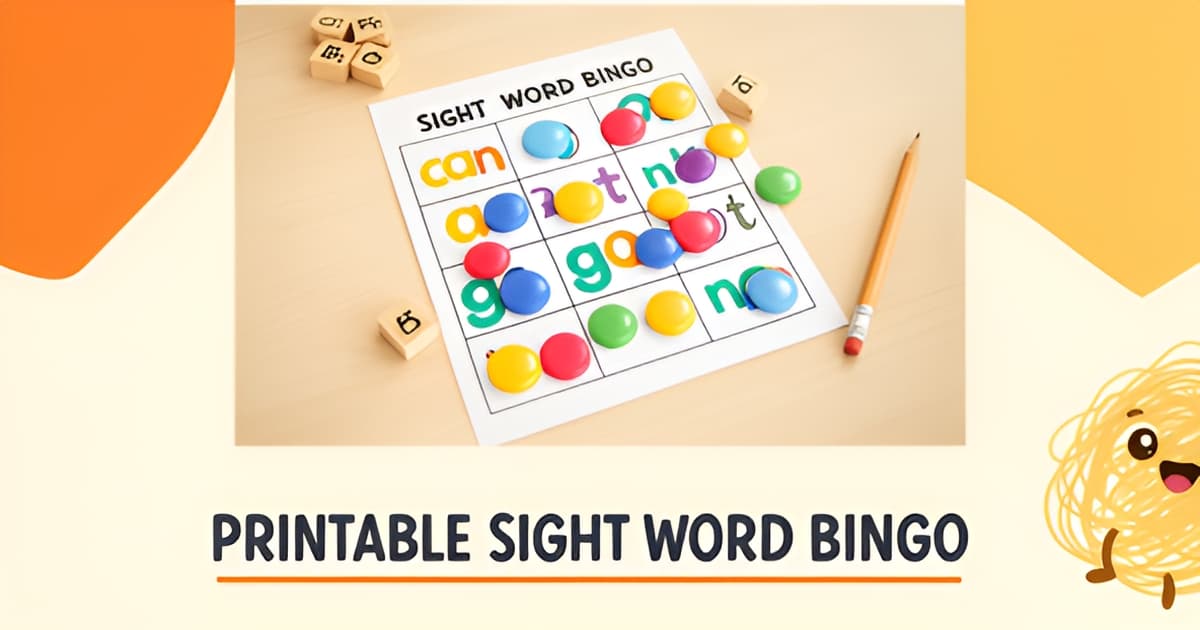
- Bingo: a whole-class or small-group review where every word on the card has already been taught and mapped. Printoodle's first grade sight word bingo tool generates cards from your own word list in seconds.
- Memory games: keep them small, five to ten words per game, so each word gets repeated exposure without overwhelming working memory.
- Tic-tac-toe: the child must read or write the word correctly before claiming a square, which builds in a quick retrieval step.
The pacing benchmarks from earlier sections pair nicely with this approach. If a first grader is working toward the roughly 130 pre-primer, primer, and first-grade Dolch words, a weekly bingo round using that week's mapped words keeps review light and fast. You can generate matching flashcards and game sheets from the same word list with Printoodle's sight words templates, so your practice materials always match what you've actually taught.
One last principle: choose practice words your reader will meet in their current book. Words encountered in real reading material stick far better than words drilled in isolation, because the child sees the payoff immediately. Print it, play it, and watch those mapped words turn into automatic reads.
Frequently Asked Questions
What sight words should be taught first?
Should I start with the Dolch or Fry word list?
Is memorizing sight words with flashcards still a good method?
When is my child ready to start learning sight words?
How many sight words should my child know by each grade?
What are the best activities for practicing sight words?
The Right Words, in the Right Order
So, what sight words should be taught first? The answer from reading science is refreshingly simple: start with fully decodable high-frequency words like can, go, see, and not, taught through phoneme-grapheme mapping once a child has solid phonemic awareness. Save the small set of true heart words, said, the, you, for explicit flagging of just their tricky parts. Since the first 100 Fry words cover about half of everyday printed text, these early words are the highest-leverage vocabulary a beginning reader will ever learn. Then, once mapping is done, let practice do its work: bingo, memory games with five to ten words, and tic-tac-toe turn newly mapped words into automatic reads. Printoodle makes that reinforcement phase effortless, generate sight words flashcards and game sheets from your own word lists, or spin up a round of first grade sight word bingo in seconds. Your next step: pick this week's decodable words, map them with your reader, and print a game to match. Print it. Doodle it. Done.